
📍 Venue: SISTER – Renold Building, 32a Altrincham Street, Manchester, M1 7JR
Some 25 years ago Richard Rogers proposed an urban renaissance for cities across the UK. It was a moment of optimism for an urbanised world that, some ten years ago, the United Nations identified had become the most common mode of living for peoples around the globe. The intervening years have brought many criticisms, with cities being seen as places of inequality, social injustice, unsustainability and sites of global health problems. They can, of course, also be places of economic opportunity, cultural creativity, intelligent design and cutting edge architecture and planning. In this context, the conference explores diverse readings of the places we inhabit: their design, planning, management, social policies and cultural trends.
In partnership with the University of Salford and Amps

Community Partner: Pro Manchester

Powered by Advanced Research + Invention Agency

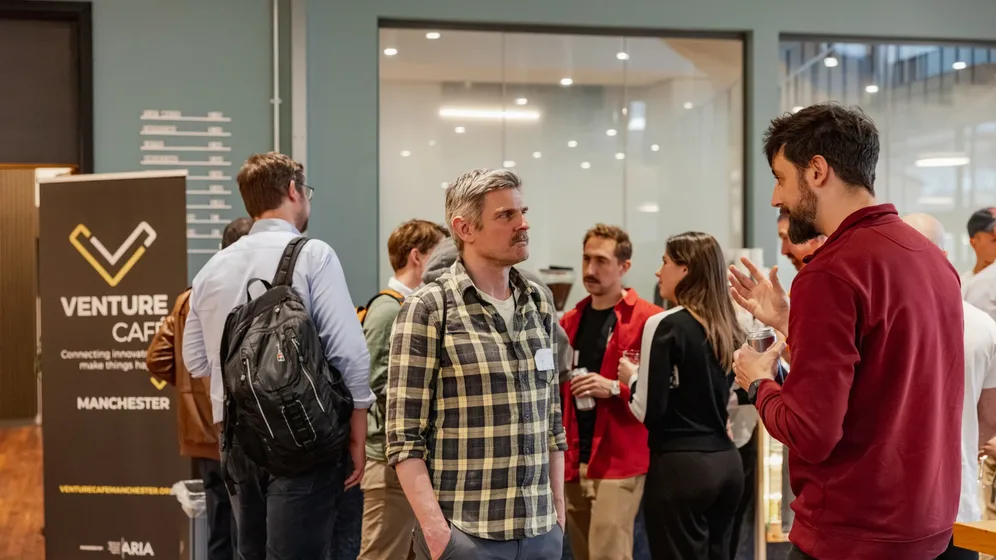
Step into a space where every conversation could spark something new. Enjoy music, refreshments, and a lively atmosphere designed to bring people together, whether you’re exchanging ideas, discovering collaborators, or simply sharing a laugh. This is the perfect moment to unwind, connect, and let serendipity guide your evening.
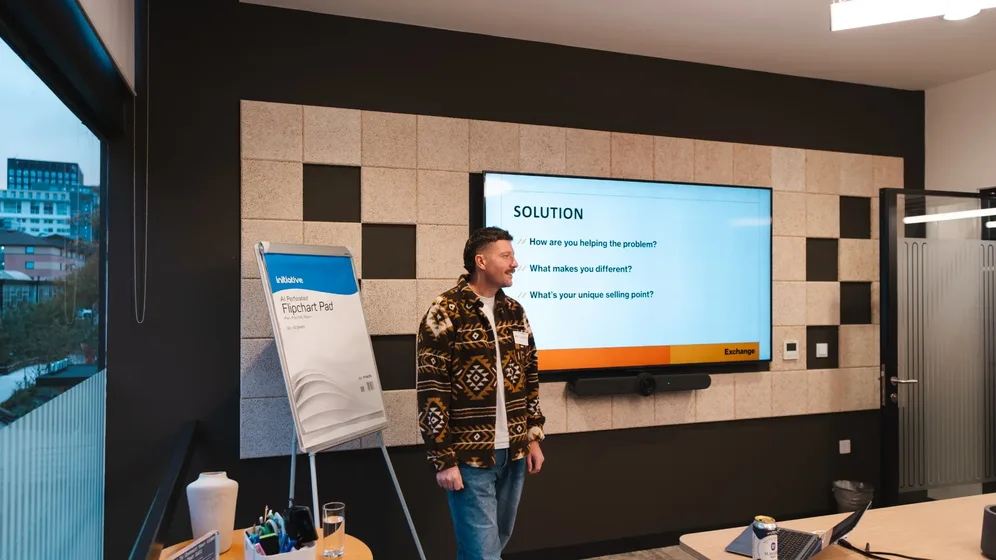
Every day, brands compete for our attention across the urban landscape. Through typography, colour and imagery they influence where we go, what we notice, and how we feel. These visual systems have become so embedded in our society that we rarely question their impact. Yet growing research suggests that design does more than communicate; it shapes our perceptions. If brand design has the power to influence how we experience our cities, what responsibility do designers have in shaping the spaces we inhabit?
Introduction from Venture Café.
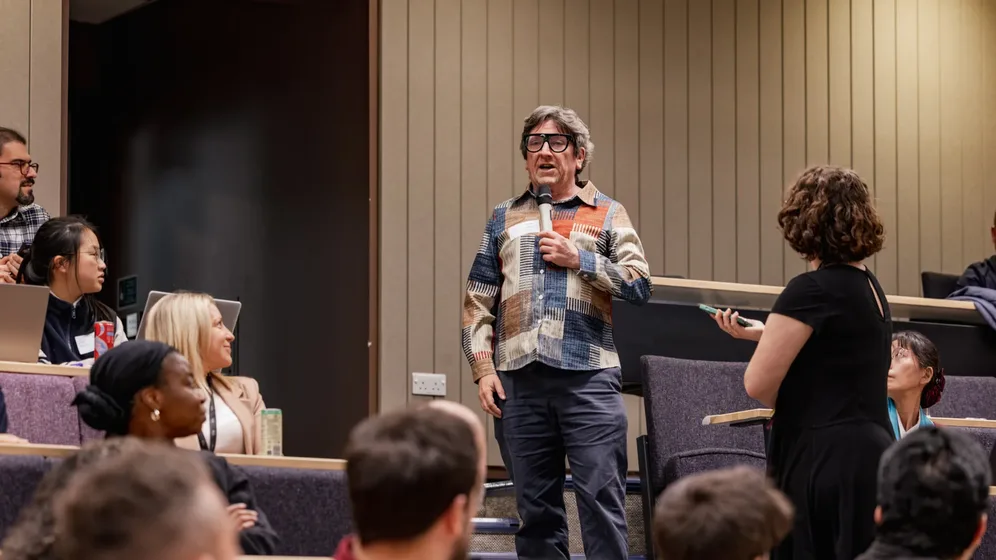
Join our Lightning Pitch session where you’ve got just 60 seconds to introduce yourself and share your business or idea with the room. It’s fast, fun, and a brilliant way to meet fellow founders, spark conversations and get your idea out into the Manchester startup community.
🎟️ If you are interested in pitching, please pick up a raffle number from the registration desk for a chance to be selected to pitch!
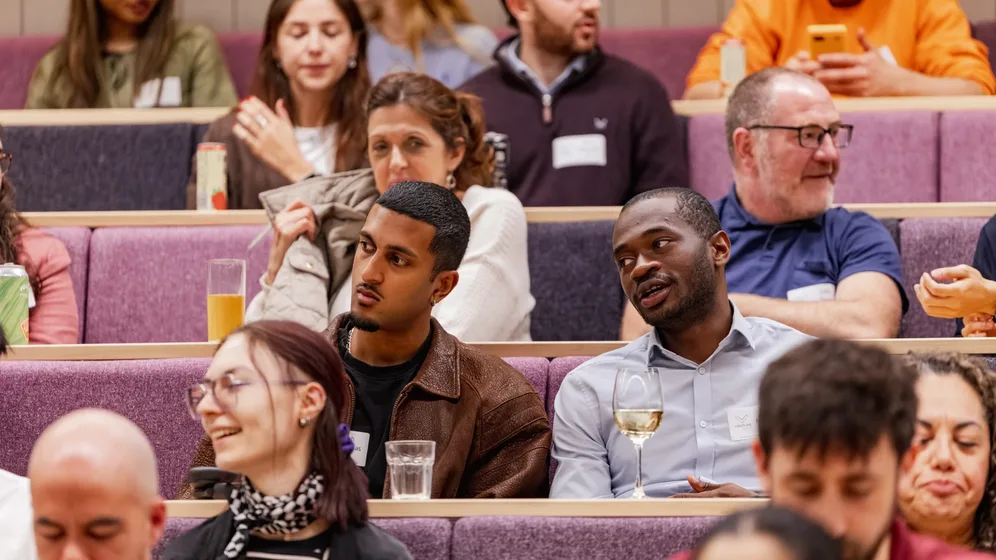
AMPS is an international research network exploring the intersection of architecture, media, politics and society. Expect insights into how design, culture, education and the built environment shape the way we live, work and connect.
Ricardo Sosa-Mejía will introduce Heatherwick Studio, presenting who the studio is, what it does and the principles that guide its work. He will share three reflections that highlight the studio’s core beliefs, design approach and the impact it strives to achieve through its projects.
Heatherwick Studio, founded by Thomas Heatherwick, is a team of over 260 problem solvers dedicated to making the physical world around us better for everyone. Based out of their combined workshop and design studios in London and Shanghai, they create buildings, spaces, objects and infrastructure. They want to see a world where the buildings and places around us are radically more joyful, engaging and human. Their team of architects, designers, makers, engineers, and landscape architects share a motivation to design soulful and impactful places, which celebrate the complexities of the real world. The approach driving everything is to lead from human experience rather than any fixed design belief.
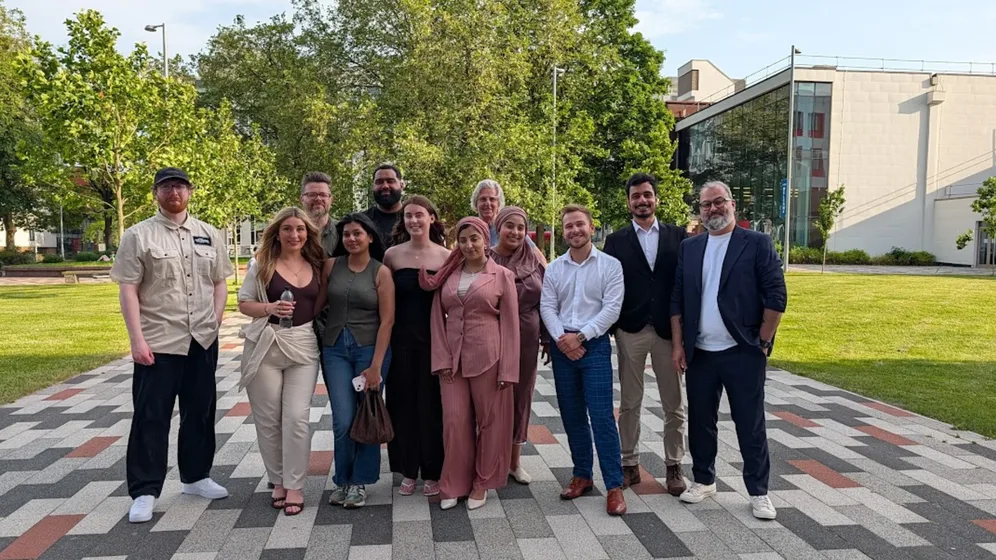
The Salford Laboratory of Architecture (S-LAB) is a cohort of M.Arch students that approaches architectural education as a laboratory of experimentation rather than a conventional school of architecture. Working across diverse global contexts, students develop individual design research projects through testing, making, analysis, consultation, and direct engagement with place. From parametric modelling and spatial analytics to physical prototyping, live-streamed site visits, and community participation, projects evolve through iterative processes of enquiry. S-LAB positions architecture as a mode of research, where knowledge is generated through experimentation and experience as much as through design itself.
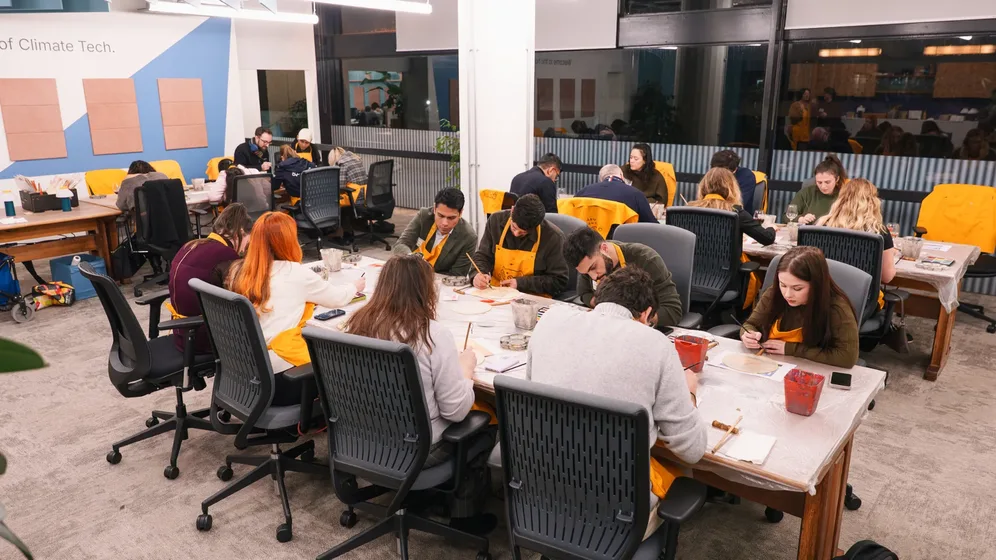
Paint, personalise, and take home your own DeKiln tile. In this interactive workshop, you'll decorate a tile made using DeKiln’s innovative non-fired BioSintering process, which achieves a 20x lower carbon footprint versus conventional ceramic tiles whilst having a recycled content of over 95%. A fun and creative introduction to sustainable materials innovation.



📍 Venue: SISTER – Renold Building, 32a Altrincham Street, Manchester, M1 7JR
Some 25 years ago Richard Rogers proposed an urban renaissance for cities across the UK. It was a moment of optimism for an urbanised world that, some ten years ago, the United Nations identified had become the most common mode of living for peoples around the globe. The intervening years have brought many criticisms, with cities being seen as places of inequality, social injustice, unsustainability and sites of global health problems. They can, of course, also be places of economic opportunity, cultural creativity, intelligent design and cutting edge architecture and planning. In this context, the conference explores diverse readings of the places we inhabit: their design, planning, management, social policies and cultural trends.
In partnership with the University of Salford and Amps
Community Partner: Pro Manchester
Powered by Advanced Research + Invention Agency
Step into a space where every conversation could spark something new. Enjoy music, refreshments, and a lively atmosphere designed to bring people together, whether you’re exchanging ideas, discovering collaborators, or simply sharing a laugh. This is the perfect moment to unwind, connect, and let serendipity guide your evening.
Every day, brands compete for our attention across the urban landscape. Through typography, colour and imagery they influence where we go, what we notice, and how we feel. These visual systems have become so embedded in our society that we rarely question their impact. Yet growing research suggests that design does more than communicate; it shapes our perceptions. If brand design has the power to influence how we experience our cities, what responsibility do designers have in shaping the spaces we inhabit?
Introduction from Venture Café.
Join our Lightning Pitch session where you’ve got just 60 seconds to introduce yourself and share your business or idea with the room. It’s fast, fun, and a brilliant way to meet fellow founders, spark conversations and get your idea out into the Manchester startup community.
🎟️ If you are interested in pitching, please pick up a raffle number from the registration desk for a chance to be selected to pitch!
AMPS is an international research network exploring the intersection of architecture, media, politics and society. Expect insights into how design, culture, education and the built environment shape the way we live, work and connect.
Ricardo Sosa-Mejía will introduce Heatherwick Studio, presenting who the studio is, what it does and the principles that guide its work. He will share three reflections that highlight the studio’s core beliefs, design approach and the impact it strives to achieve through its projects.
Heatherwick Studio, founded by Thomas Heatherwick, is a team of over 260 problem solvers dedicated to making the physical world around us better for everyone. Based out of their combined workshop and design studios in London and Shanghai, they create buildings, spaces, objects and infrastructure. They want to see a world where the buildings and places around us are radically more joyful, engaging and human. Their team of architects, designers, makers, engineers, and landscape architects share a motivation to design soulful and impactful places, which celebrate the complexities of the real world. The approach driving everything is to lead from human experience rather than any fixed design belief.
The Salford Laboratory of Architecture (S-LAB) is a cohort of M.Arch students that approaches architectural education as a laboratory of experimentation rather than a conventional school of architecture. Working across diverse global contexts, students develop individual design research projects through testing, making, analysis, consultation, and direct engagement with place. From parametric modelling and spatial analytics to physical prototyping, live-streamed site visits, and community participation, projects evolve through iterative processes of enquiry. S-LAB positions architecture as a mode of research, where knowledge is generated through experimentation and experience as much as through design itself.
Paint, personalise, and take home your own DeKiln tile. In this interactive workshop, you'll decorate a tile made using DeKiln’s innovative non-fired BioSintering process, which achieves a 20x lower carbon footprint versus conventional ceramic tiles whilst having a recycled content of over 95%. A fun and creative introduction to sustainable materials innovation.